
Oxygen as Brain Medicine: Hyperbaric’s Impact on Cerebral Function and Resilience

As a neurosurgeon who’s spent years thinking about ways to heal the ailing brain, I’m excited about treatments that go beyond the scalpel. Hyperbaric oxygen therapy (HBOT)—breathing pure oxygen in a pressurized chamber—feels like a breath of fresh air for brain medicine. It ramps up oxygen delivery to tissues, potentially sparking neuroplasticity, reducing inflammation, and boosting cerebral blood flow. Recent evidence paints a promising picture for conditions like traumatic brain injury (TBI), stroke, and cognitive decline.
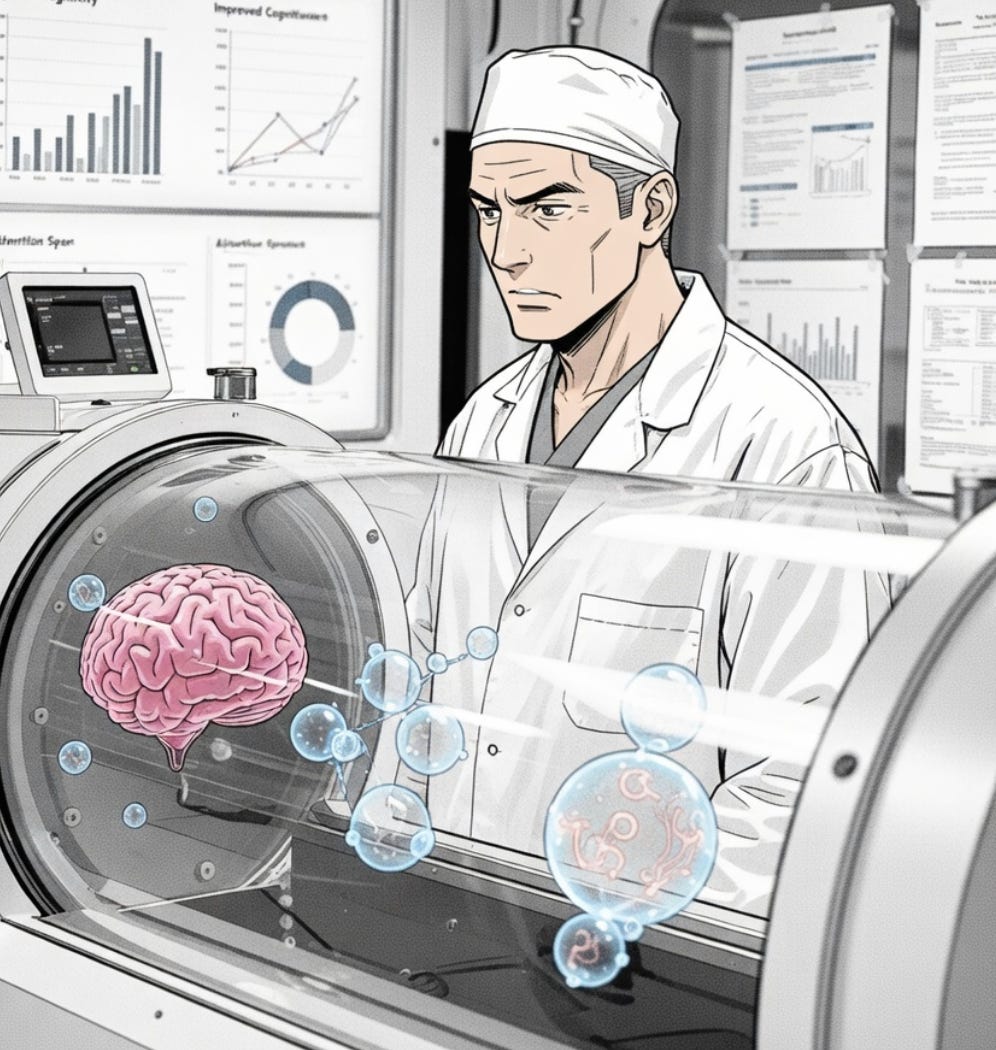
When it comes to traumatic brain injury (TBI) and those lingering post-concussion symptoms that just won’t quit, the latest research is pretty encouraging. Coming out of Pakistan, in 2025, a meta-analysis looked at around 250 patients and found that HBOT—usually 40 to 60 sessions at 1.5 to 2.0 atmospheres—really helped sharpen things up. Folks saw noticeable boosts in memory (up about 10 points on average), attention (around 8 points), executive function (7 points), and overall thinking skills. It’s not magic, but the numbers are solid.
Then there’s this other 2025 study, from Israeli scientists, on adults who had TBIs as kids—some injuries going back decades. After HBOT, they gained ground in global cognition (plus 8 points) and processing speed (nearly 10 points), no matter how long ago the injury happened or how severe it was originally. Even animal studies back this up: in rats with TBI, HBOT protected the brain’s energy factories (mitochondria) and kept more neurons alive, leading to better memory and movement.
That said, not everyone’s convinced yet. A 2025 Department of Defense review pointed out that results in humans can be inconsistent—some well-designed trials for mild TBI only showed short-lived improvements, and bigger, rigorous studies sometimes didn’t find lasting differences over sham treatments. So, it’s promising, but we need more data to nail it down.
For stroke recovery, things look interesting too. In 2026 Chinese scientists reported a randomized trial on post-stroke depression showed HBOT easing depressive symptoms pretty quickly—scores dropped significantly by week 4—likely because it bumped up helpful brain chemicals like BDNF and beta-NGF. In mice with vascular cognitive issues, it improved blood flow and memory through specific pathways. And for trouble sleeping after a stroke, a 2024 review suggests HBOT could be a gentle, non-drug way to dial down oxidative stress and help with rest.
Looking beyond acute injuries, HBOT might have a role in keeping aging brains sharper. Research in healthy older adults has linked it to better attention, quicker processing, and stronger executive skills, thanks to improved blood flow in the brain. In Alzheimer’s mouse models, longer-term HBOT cut back on harmful buildups and helped cognition. Even for that foggy feeling post COVID, researchers in Chicago reported clearer thinking, more energy, and better sleep.
Look, HBOT isn’t without downsides—it’s not risk-free. The most common issues are ear pressure or pain (like on a plane), sinus stuffiness, temporary nearsightedness that usually clears up after treatment ends, or feeling claustrophobic in the chamber. Rarer but more serious ones include oxygen toxicity (which could lead to seizures or lung issues), especially if protocols aren’t followed carefully. That’s why it’s always done with medical oversight to keep things safe.
Right now, HBOT isn’t FDA-approved for most of these brain uses—it’s off-label—but trials are heating up, like that big $28 million USF Health study on veterans with TBI. If brain fog, old injuries, or cognitive slips are hitting close to home, chat with a specialist who knows this space. Could pressurized oxygen become a real game-changer in brain recovery? I’m keeping a close eye on it—feels like we’re onto something meaningful.