

Be honest, it’s crossed your mind a time or two: Zuck is a cyborg. Maybe so. But I’ve got to hand it to him and Facebook’s AI team. They’ve just built a digital brain that belongs in a sci-fi movie.
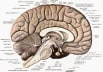
I’ve touched living human brains with my own two hands. It’s a fragile, breathtaking map of a person’s entire existence… memories, loves, hopes, fears. Historically brain surgery’s been a game of reaction. We cut out lesions after they appear on a static MRI. We play guesswork with seizures. Meanwhile, drug trials for psychiatric and neurodegenerative diseases are a total graveyard of failures. Why? Because 86 billion neurons (with their trillions of synapses and constant rewiring) are simply too complex to predict.
I never imagined I’d one day rehearse life-saving procedures on a brain twin built by Meta. Here we are, though. Digital biology! Scientists have found a way to fuse genomics, connectomics, and neuroimaging with AI to create programmable, simulatable systems. Stanford scientists laid the foundation in 2025. Researchers, led by Andreas Tolias, built an AI model of the mouse visual cortex trained on neural activity from mice watching movies. It predicts responses to new stimuli and infers cell types and connections. What does that mean for you? Well, it lets us perform a gazillion virtual surgeries before touching a living brain.
And Zuck? His team engineered the leap to humans. In March 2026, Meta AI released TRIBE v2: a predictive model, which explicitly behaves as a digital twin of human neural activity. Trained on high-resolution fMRI from over 700 volunteers who experienced videos, podcasts, images, and text, it predicts brain responses across visual, auditory, and language networks. What’s more, it generalizes to new subjects, languages, and tasks with high accuracy and mind-blowing resolution.
Want to hear something else? The brain isn’t purely cooperative; there’s fierce competition between systems for resources. Incorporating this type of interaction captures attention, memory limits, energy efficiency, and unique “brain fingerprints.”
So, welcome to the age of personalized medicine. Consider epilepsy: instead of guesswork in placing electrodes, docs can simulate a patient’s twin brain, trigger seizures virtually, test electrode positions, and optimize outcomes. Far better to fail in silicon and succeed in the OR. For Alzheimer’s, twins model plaque and tau spread over years, virtually screening amazing new drugs before they cause side effects in people. In psychiatry, we can predict responses to ketamine or TMS, ending trial-and-error torment.
Beyond Zuck, other labs, grounded in gritty biology, grow patient-derived neurons, introduce mutations, and use AI on test data.
The downside? Neural data privacy and ownership of cognitive fingerprints are still up in the air.
All in all, I’m filled with hope. We’re building virtual brains in silicon to heal real ones in flesh. Zuckerberg’s team, alongside neuroscientists worldwide, is accelerating a shift from reaction to prediction. The revolution has arrived and it is gaining speed.
Wow. Seizures are pretty darn scary to observe, especially finding something to help in the moment. Anything to predict some exit strategies; definitely.
This is very interesting information and I hope it is used the way you describe. BUT, Skynet is not mankind's friend and I pray for you and your family's safety WHEN things go wrong.